Here’s a scenario that should give any foodservice operator pause: a restaurant chain develops a new burrito concept and sources roughly 200,000 pounds of diced steak. The steak is spec-compliant, properly cooked, and delivered on time.
Then the burritos hit the kitchen, and things start to fall apart. Bringing the meat up to a safe serving temperature inside the assembled burrito causes the tortilla and surrounding ingredients to burn before the protein finishes reheating.
Pounds and pounds of perfectly good protein, and the product still fails.
What followed was costly in every direction. The steak dice had to be reformulated to reheat faster. All of the inventory already produced at the original spec had to be liquidated at a discount.
Stories like this are more common than the industry talks about. The companies that avoid these missteps do so by building the partnerships and processes that make commercialization predictable.
What the Meat Market Now Demands
Since COVID-19 upended restaurant supply chains and consumer demand, buyers have grown increasingly wary of holding onto large quantities of product, especially after many inadvertently locked themselves into massive inventory commitments they couldn’t sell during the pandemic.
The market now prioritizes more agile, responsive partnerships. Ones where manufacturers can move quickly and accommodate volatility, while helping operators launch confidently without carrying unsustainable risk.
This kind of partnership is grounded in three interconnected processes: innovation that turns a vision into a commercially viable product, preparation that ensures a product holds up in real environments, and sourcing that keeps supply consistent and competitively priced no matter what the market’s doing.
As Matt Siciliano, Miniat’s Sr. Manager of National Accounts, puts it: “A reliable partner doesn’t just offer the cheapest price. They offer a price in the right ballpark while also providing forward planning, market analysis, and general market education, presenting smart buying opportunities as they arise.”
Bringing the best protein solutions to market isn’t about getting one thing right. It’s about getting everything right—at the same time, every time.
Here’s what that looks like across all three phases of the production cycle.
1. Innovation: Building Proteins That Scale
The most impactful innovations in meat production aren’t always the ones that make headlines. More often, they’re the flavor improvements that keep customers coming back, the yield gains that quietly add to the bottom line, and the process refinements that ensure a recipe’s consistency across 500 locations.
Innovation in protein products should remove ambiguity, strengthen formulations, and deliver final products that delight both sides of the counter.
Three Technical Conversations You Should Have Before Innovating
Protein innovation begins with your product vision, whether it’s focused on flavor, texture, juiciness, or something else entirely. To bring that vision to life, you need to consider your specific operational and technical realities, including label requirements, recipe specifics, and processing constraints, such as kitchen and staff limitations.
A protein partner navigates these realities for you and translates your vision into market-ready formulations. To ensure success, you and your manufacturer should have these three technical conversations before your pilot product is crafted.
1. Raw Material Selection and Claims
You may have clear direction for the claims you want for your product, like “clean label,” “antibiotic-free,” “grass-fed,” or “minimally processed.”
Claims like these can feel like they’re associated with straightforward instructions, but they’re actually constraints that can ripple through your entire meat processing formula. They narrow the pool of available protein sources, eliminate functional ingredients used for tenderization, and make it more challenging to improve yield or meet shelf-life targets.
Your product claim goals reveal more important questions: the sourcing conversation isn’t “what do you want it to say?” It’s “what does this claim need to protect, and what compromises are you willing to make to achieve this?”
2. Formulation Specifics
At Miniat, we once had a customer come to us with a robust formula they had already developed—specific ingredients, specific ratios, an antimicrobial component—it was a clear picture of what they wanted the finished product to be. On the surface, it looked complete.
But our R&D team read between the lines. They recognized that the antimicrobial component, as specified, wouldn’t result in a commercially viable shelf life for this particular application.
Rather than simply building what was on paper, we asked the client if we could take some creative liberties with their original formula. The tweaks we recommended ensured the product remained food-safe while still using ingredients that aligned with the company’s ethos, and still tasted exactly as intended. We’re proud to say the item is still being produced today.
3. Protein Processing Method Considerations
Your chef can achieve a perfect, crispy-skinned chicken breast for a banquet with relative ease. Replicating that same chicken breast using large-scale commercial processing is a very different kind of challenge, but it’s entirely solvable.
The key is discussing the appropriate questions before protein processing development starts. How will the operator actually finish and serve this product? What equipment do they have? What will the reheating process look like in a real kitchen under real conditions? These are the details that need to be considered to ensure your product vision is achievable at scale.
The Difference Between “Successful Pilot Samples” and “Commercially Successful”
Getting a product to work in a controlled kitchen environment is one thing. Getting it to work reliably across hundreds of locations, in the hands of operators with varying equipment and experience levels, is something else entirely.
Pilot Lab Success and Scaled Success are Not the Same Standard
A product that performs beautifully under ideal conditions marks just the first step in development. The real test happens on a random Tuesday afternoon in one of your locations’ kitchens.
When a concept has been ops-tested, stress-tested, and validated against the real equipment and real conditions your kitchens run every day, the launch is different. It’s not just a product that survived production at scale. It becomes a menu anchor. That’s what thorough development actually produces.
Application Testing: Mirroring Your Operational Conditions
To test if a concept actually works, Miniat maps the realities of your kitchens, including specific reheating methods and equipment. We then pressure-test the product against this mock kitchen, whether that means microwaving samples or sourcing the same oven your operators use. Application testing also measures practical factors, like the time it takes to reheat a product, so you know exactly how your product will fit into your operations.
How Culinary and R&D Work Collaboratively to Commercialize Proteins
At many manufacturers, the Culinary and R&D teams operate separately, but they must be in constant communication when developing products. Here’s how these two teams should work together to bring your protein products into the world.
Start with Culinary Understanding
Generally, the innovation process starts with the Culinary team, which acts as an interpreter for customer needs. This is where the creative work begins. The Culinary team explores how to translate a brief into a concept. They push in multiple directions, weigh contrasting priorities, and try things that might be less obvious.
When a concept clicks, you feel it: the flavor profile is right, the texture is there, and the product tells a story your customers will want to keep coming back to.
Scale with R&D Expertise
Once our Culinary team develops a concept that resonates with your team, the concept “graduates” to R&D, where it will be formulated to succeed at scale. R&D will create prototypes based on the quality attributes of the Culinary team’s original concept.
From the prototypes, R&D will iterate with your feedback, honing the flavors, textures, and ingredient labels until you are proud of the product.
Build on Strategic Innovation
There’s a lot of collaboration between Culinary and R&D on the path towards a launch-ready product. No change, however minor, moves forward without the right eyes on it.
For example, if you request a small recipe change, like swapping out black pepper for white pepper, Miniat R&D will consult with the Culinary team to gauge how this seemingly insignificant change impacts the product.
When R&D is nearing the final stages of commercial meat production, they will bounce the concept back to the Culinary team to test the food using the exact heating methods and equipment your kitchens will use.
Breaking down these silos and working together as a team helps your product innovation remain agile.
Who Drives Product Innovation—You or Your Manufacturer?
Some customers arrive at Miniat with a fully realized vision for their custom protein solutions. They know exactly what they want to create, how they want it to taste, and what role it will play on the menu. In those cases, our job is to execute that vision with precision, matching the spec, honoring the intent, and doing the tricky technical work behind the scenes.
Other brands may want a more collaborative relationship. They might have a direction but not a final destination in mind, and they’re looking for a partner who can bring ideas to the table and help shape the final product. Miniat will research their previous menu items, develop some initial concepts, and work with them to identify the most exciting path forward.
A manufacturer worth working with can do both. What they bring to both scenarios is the same: deep market knowledge, technical expertise, and the protein manufacturing capabilities to take an idea from concept to scale.
2. Preparation: How Prep Translates into Consistency
Once you’ve developed a fully vetted concept, the real work begins: making sure your concept actually holds up in a real kitchen.
The decisions made at the prep stage directly impact your bottom line through product consistency, labor costs, and kitchen training—all of which have meaningful downstream effects on operators trying to run a consistent operation.
The Prep-Related Questions Buyers Forget to Ask
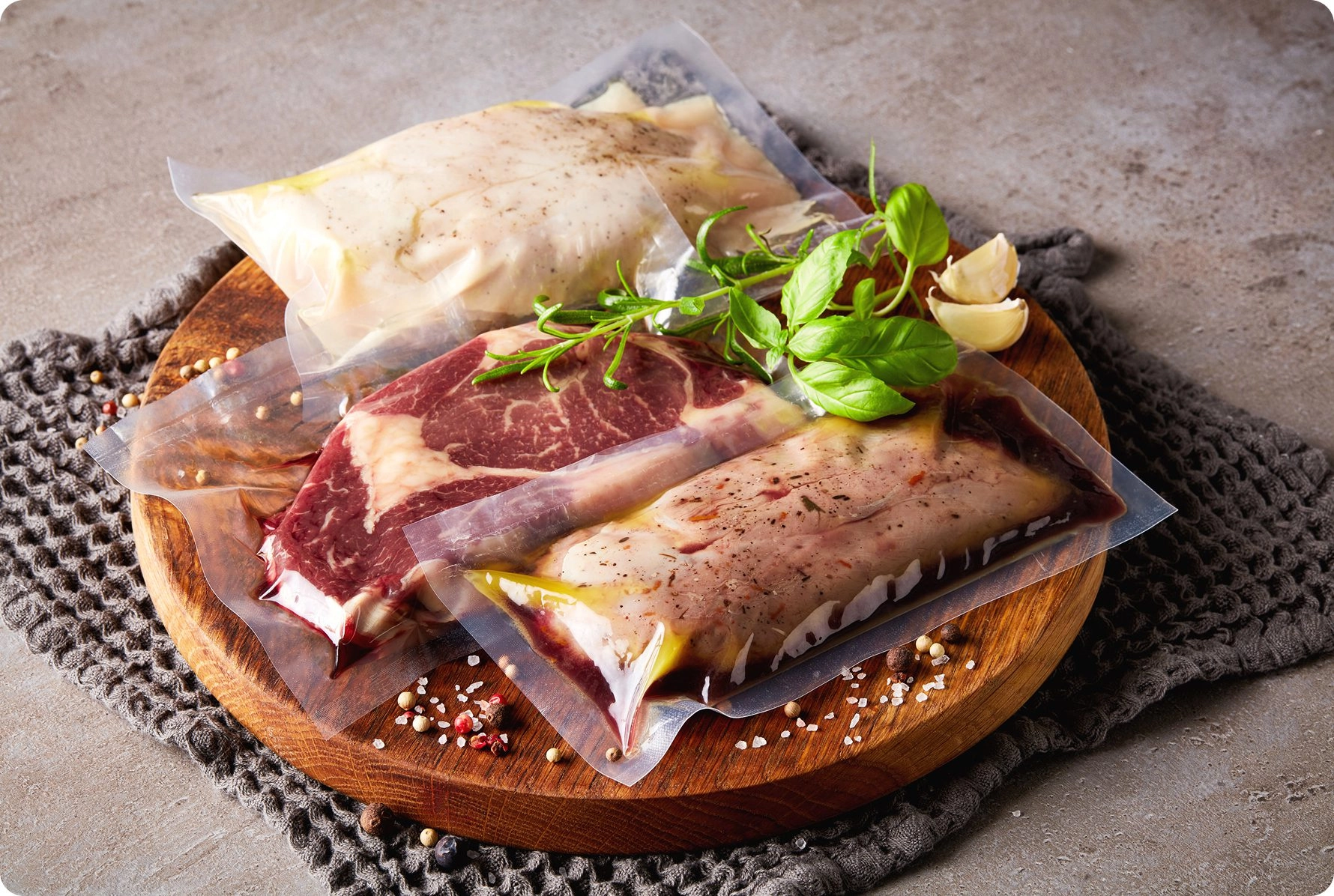
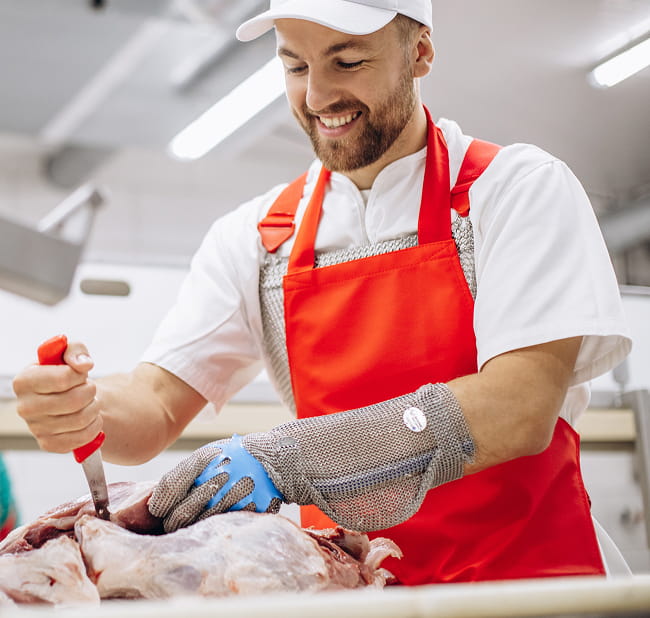
A common question we get when working with a new customer is, “How is your meat cooked and prepared?” As the company that pioneered sous vide cooking in North America back in the 1980s, Miniat has seen prospective partners initially balk at “sous vide,” assuming it is either too premium for their needs or out of their budget.
Instead of only asking about process, more helpful questions explore outcomes:
- How will prep affect yield?
- How will prep impact tenderness and flavor consistency from batch to batch?
- How will prep help different employees achieve similar results?
When you dig into the specifics of a protein supplier’s production, focus on how different preparation methods deliver consistency.
Whether it’s hand trimming to 1/16″ precision, cooking to exact degree increments, or hitting a specific portion weight every time, that level of control is what turns a concept into a product you can count on across every location.
How Equipment Alignment Makes or Breaks a Product
Operational commitment comes from building formulas around your equipment, not industry-standard equipment. This shows how a product will perform with the actual tools your operators use every day.
This requires testing in real environments that mirror what your kitchens actually look like. It means understanding whether your locations are reheating product in a RATIONAL oven or a microwave, and verifying whether the protein will perform under those real operating conditions before the product ever arrives at a single location.
At Miniat, we make it a point to purchase the specific ovens, rethermalizers, steamers, and other kitchen equipment our customers might use in their locations to ensure our proteins perform.
Small Decisions Compound into Massive Labor Wins
With the rise of labor costs further pressuring restaurant profitability, the back-of-house implications of prep decisions have never mattered more.
Consider this real-world example that Dylan Donovan, Director of Research and Innovation, encountered with a Miniat customer:
“In my experience, sometimes what a client asks for isn’t what they really wanted. If we can anticipate what they really want, we’ll send multiple samples. For example, one client wanted ¼-inch by ¼-inch by 1½-inch meat strips. But when we cooked those pieces, the shrinkage gave our own chefs difficulty separating and serving the meat.
“We sent them what the client requested but we also delivered ½-inch by ½-inch by 1½-inch meat strips, which we believed would perform better for their needs. Once they saw how the updated size performed, they realized that’s what they actually needed.”
These are the kinds of interventions that happen every day in the Miniat kitchen. A proactive protein partner anticipates these breakdowns, eliminating small hurdles like unnecessarily tedious prep and maximizing your staff’s time.
Why The Feedback Loop Is Essential Between Sample Iterations
A feedback loop is a highly iterative process that helps to bridge the gap between concept and a commercialized final product.
No matter how detailed your instructions are at the start, these specifications rarely translate perfectly in the first pass of the product. A feedback loop enables real-time course corrections, allowing you to communicate, monitor, and adjust product specifications until the prototype becomes a product that exceeds your expectations.
The feedback loop should touch on everything—flavor, texture, cook time, formulation, etc. Doing so allows the developer to align specifications with operational reality.
3. Sourcing: Decisions That Enable Flexibility
When it’s done well, you should never have to worry about sourcing—it’s a part of the process your protein partner owns. But knowing what a healthy strategy looks like enables you to ask better questions, evaluate partners more clearly, and recognize the difference between a manufacturer who is simply reacting to the market and one who is genuinely ahead of it.
Common Misconceptions About Protein Supply Chains
Protein sourcing has a steep learning curve, and buyers coming to protein from other supply chain backgrounds often underestimate the challenges.
The variables driving price and availability are more numerous and less predictable than most new protein buyers expect. Two assumptions often cause the most trouble:
Protein Pricing Doesn’t Always Work Like a Financial Market
Many buyers make a reasonable assumption about protein sourcing: set a pricing floor and a ceiling, lock in a price, and take delivery when the market moves in your favor. It’s a logical framework—but Kevin Speed, Miniat’s Senior Procurement Manager, explains why it doesn’t work in the meat market:
“On the stock exchange, if you want to create a pricing floor and a ceiling, you don’t have to sign a contract with someone. That lever doesn’t exist in the protein world. There’s global trade, currency shifts, rain, cost of grain—I think it’s easy for customers not to look at these variables.”
Protein procurement is complicated because every purchase has to be individually negotiated and contracted.
Better procurement strategies use a multi-pronged approach to finding the best deals, including (but not limited to) the following buying approaches:
- Fixed Price: Locking in a set price per unit for a defined volume and period, regardless of what happens in the underlying market.
- Market Trailing: Pegging a price to an agreed-upon external benchmark, often with a premium or discount.
- Working Price Average (WPA): Establishing your effective price as the volume‑weighted average of multiple purchases or time periods.
The buying strategy the procurement team uses for each purchase is entirely dependent on what will get you the best deal. One buying cycle might find that a fixed price is the winning approach, while the next cycle rewards WPA.
Protein Purchasing Operates in Volatile Markets
Protein supply chains are prone to disruption. Geopolitical events, environmental legislation, and avian influenza outbreaks, among other factors, can all create a domino effect of delays and shortages.
But this complexity doesn’t mean purchasing is entirely outside of your control. Instead, it’s a reason to plan accordingly. Banking raw materials at favorable prices, understanding geographic risks in the markets you purchase from—these are the strategies built to get ahead of market volatility, not just react to it.
How Protein Supplier Relationships Affect Product Consistency
A spec sheet tells a supplier what you need. A relationship determines whether they’ll go out of their way to make sure you get it.
When it comes to protein suppliers, the difference a strong relationship makes shows up in ways that are hard to measure until something goes wrong. Cheaper meat is tempting, but it can put your operation at risk.
The Risk of Price Chasing
The temptation to switch to a new meat supplier because they quoted a lower price is understandable. But moving too quickly, without properly vetting the new supplier and understanding how they do business, is one of the most reliable ways to introduce quality issues and operational instability into a supply chain.
As Kevin Speed explains: “You have to feel comfortable with the salesperson, visit the company, and build a relationship in person. You have to see their operation run. A great price shouldn’t be the only consideration.”
In other words, procurement should feel confident in their meat supplier, and that confidence will affect the quality of deals you can make.
Treat Suppliers as Partners
Chasing short-term savings at the expense of long-term relationships creates problems that don’t always surface immediately.
Kevin Speed has seen it play out in several predictable ways. When a customer’s forecast doesn’t materialize, and they simply cut purchase orders on a vendor who reserved inventory on their behalf, that vendor will remember. The next RFP likely comes back priced higher—if it comes back at all. The same dynamic often plays out when brands shift volume away from a supplier without warning.
The alternative isn’t complicated, but it requires intention. When a forecast drops, work with the vendor to find a middle ground. When volume is shifting, stage-gate the transition and bring the meat supplier along rather than leaving them behind.
How Sourcing Decisions Create Opportunities (or Constraints) Downstream
Sourcing doesn’t just impact procurement—it determines what R&D can actually build. When sourcing conversations happen early, the options stay open: the right cuts are available, label claims are achievable, and the formula doesn’t have to be rebuilt around a supply constraint that surfaced too late.
Alignment Before Acquisition
Before a procurement strategy can take form, R&D and sourcing must first understand your business needs. As Dylan Donovan describes it:
“We listen to the customer, what species they’re looking for, what attributes they want, and all of that will influence what cut we select. Pricing, availability, market trends—all of that plays into what we’ll choose to show or not show.”
R&D will share these conversations with the procurement team, who can then make informed sourcing decisions based on your goals. This early alignment keeps the project from going off course because a key ingredient isn’t available or is out of budget.
Responsible Supply Broadening
Miniat’s procurement team doesn’t start with domestic supply and work outward—they start with the full global picture and work toward the best answer. That scope surfaces options, grades, and pricing that a purely domestic strategy isn’t able to reach.
In practice, that means starting with a complete picture of global supply and mapping available grades across markets before narrowing toward the best option. It means running stage-gated RFPs across international partners to find competitive pricing without compromising quality. And it means proactively identifying sources that support specific label claims—grass-fed, antibiotic-free, and others—so availability never becomes a reason to compromise on what the product needs to be.
Miniat’s Proactive Approach to Keeping Inventory Available
The most reliable way to manage a volatile market is to be prepared before the volatility arrives. Miniat’s procurement strategy is built around that principle, and we stay ahead of the market through strong relationships and proactive purchasing.
Banking Raw Materials Ahead of Demand
When the market presents a buying opportunity, Miniat acts on it—purchasing and banking raw materials into inventory, ahead of forecasted demand.
The benefits compound in two directions: savings captured at the right moment get passed through to the customer, and when a product needs to be deployed quickly, the raw materials have already been secured.
A Global Network That Enables Continuous Improvement
An expanded international supplier network does more than reduce cost and risk. It creates ongoing visibility into new capabilities, cuts, and production methods that a purely domestic supply base wouldn’t surface.
That reach also expands what’s possible for your R&D team. When a customer needs a specific grass-fed beef spec, or a cut with better availability in one market than another, or a processing capability that simply doesn’t exist in the domestic supply base, that global network is what makes it possible.
Miniat’s trusted supplier relationships span Canada, the UK, Australia, and Uruguay — a network built over decades that gives our procurement team continuous access to the best available supply, regardless of what any single market is doing.
When Innovation, Prep, and Sourcing Work as One
When innovation, preparation, and sourcing work as a unified system, the result is a different kind of reliability. Fewer surprises at launch. Faster paths from concept to commercial kitchen. Protein solutions that perform consistently across 10 locations or 500, in the hands of experienced operators and rookie staff alike. A supply chain that doesn’t buckle when the market gets unpredictable.
A partner understands what you’re trying to build, anticipates what could go wrong, and brings the infrastructure to scale alongside you.
For more than 120 years, that’s been Miniat’s standard. We’ve spent decades building the expertise, relationships, and systems to navigate volatile markets and menu item challenges. When you’re ready to bring your next protein concept to market, we’re ready to make sure it gets there successfully.